• 10 min read
realme P4 vs. TECNO POVA 7 Neo: The 7,000 mAh Budget Battery Showdown
We put two sub-$200 battery monsters with massive 7,000 mAh cells, 120Hz screens, and 45W fast charging through real-world testing. Can a budget 4G powerhouse make sense for US and European users?
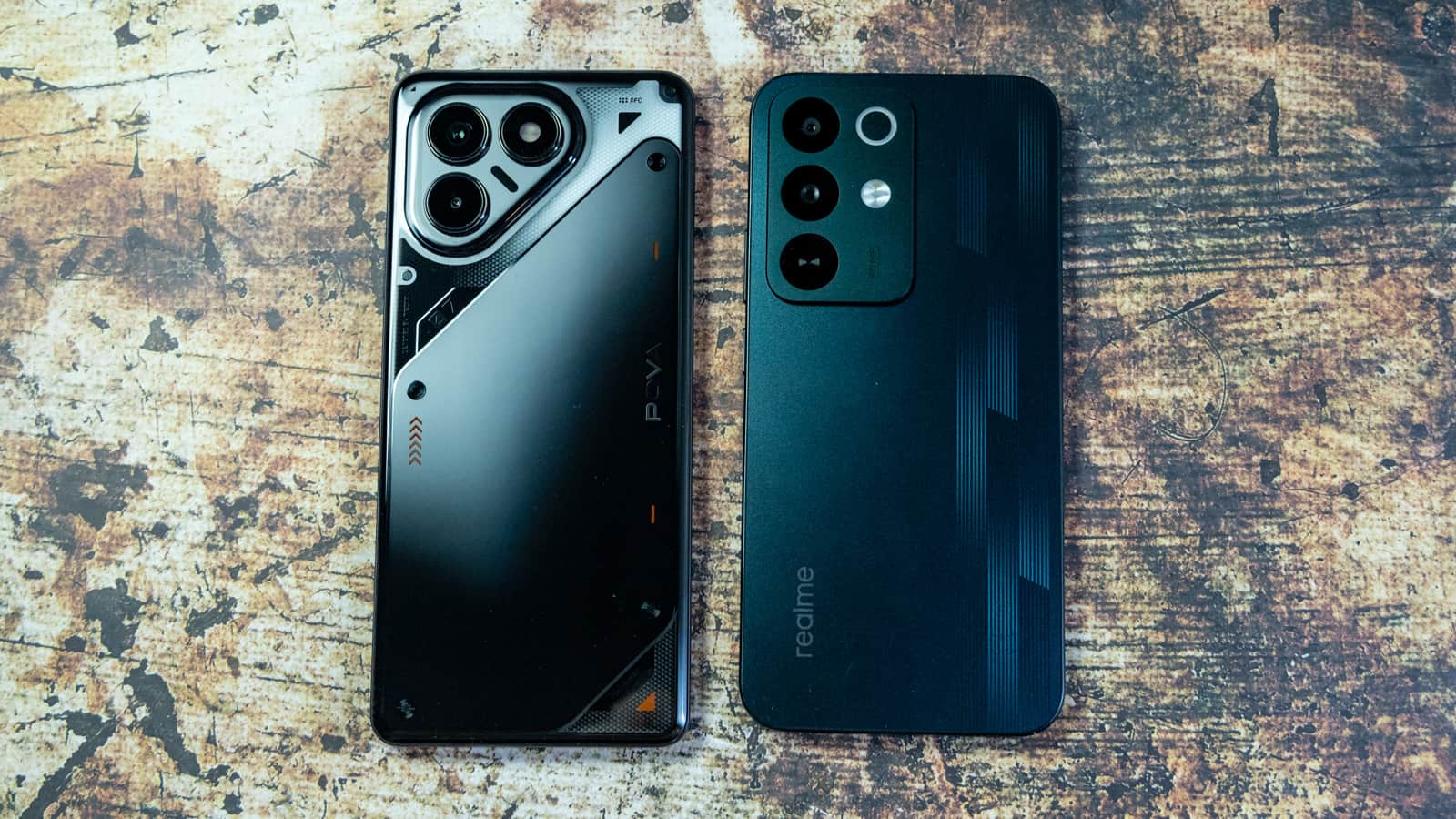
Image: Sergey Kuznetsov / for(geeks)
In the United States and Western Europe, the budget smartphone landscape has fallen into a predictable rut. Spend between $180 and $230, and carrier storefronts will inevitably steer you toward a carrier-locked Samsung Galaxy A15/A16 or a Moto G-series handset. They are respectable, safe devices, but they almost universally cap out at 5,000 mAh batteries, plasticky bodies, and conservative 15W to 25W charging speeds that take hours to replenish—often without a power brick in the box.
Overseas, however, an entirely different sub-$200 hardware arms race is underway. The realme P4 and the TECNO POVA 7 Neo represent the pinnacle of battery-first engineering: colossal 7,000 mAh battery cells, expansive 6.8-inch 120Hz displays, and 45W wired fast charging with wall bricks included right inside the retail box. Both retail around $180 to $225 / €175 to €210 depending on the configuration.
Because their spec sheets read almost like clones, we tested both smartphones side by side for over two weeks across identical everyday apps, cellular benchmarks, camera scenarios, and battery drain routines. For Western tech enthusiasts, international travelers, and gig-economy workers looking for an indestructible multi-day workhorse, is importing one of these 7,000 mAh endurance champions worth it—and which one actually earns your money?
Recommended reading
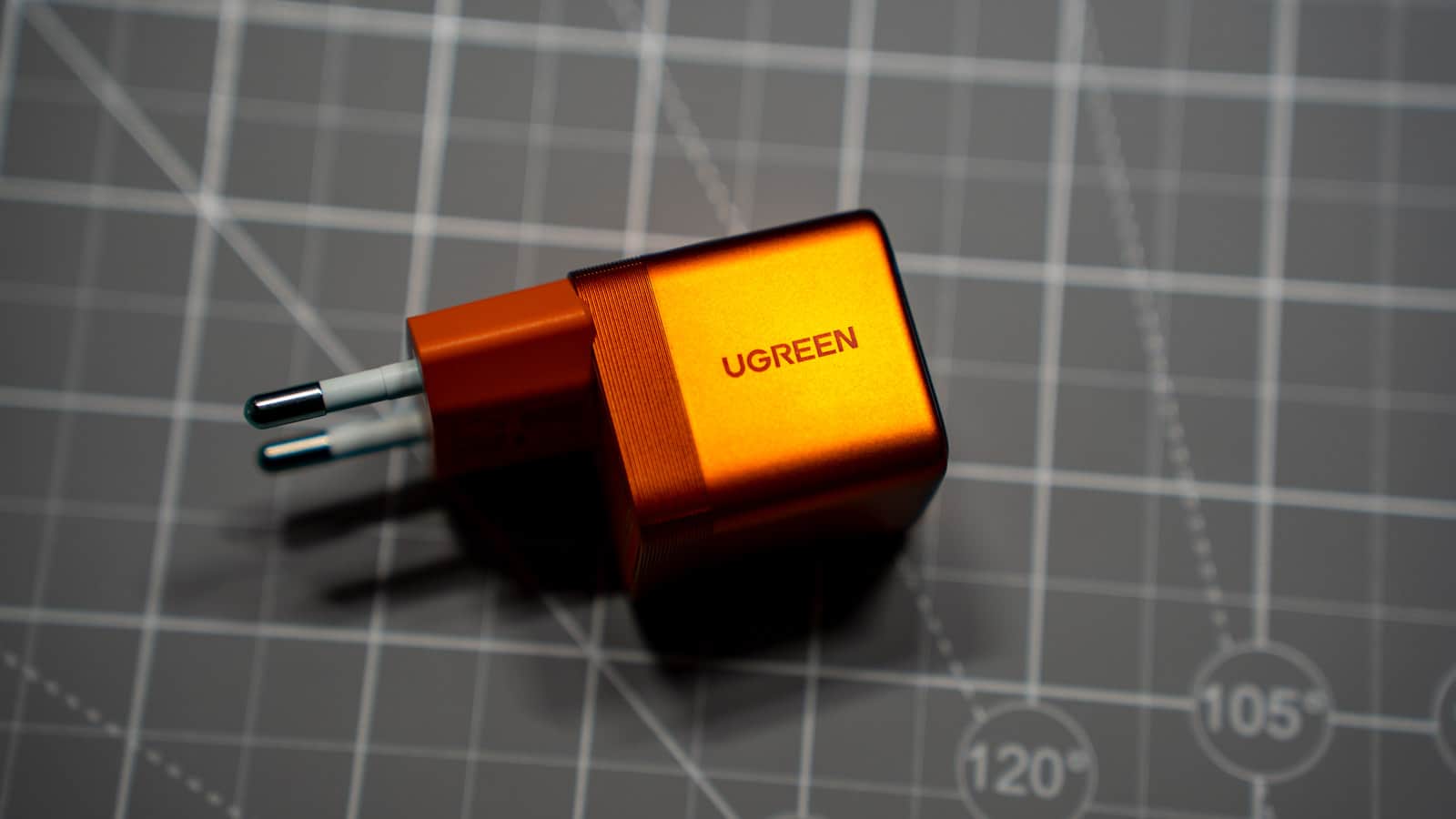
UGREEN Nexode Air 65W Review: The Orange GaN Cube That Punches Above Its Weight
Sergey Kuznetsov • • 14 min read
The Battle Lines: Two 7,000 mAh Budget Giants Compared
Before diving into hardware testing, a crucial regional distinction must be clarified. In India, realme launched a device named the realme P4 5G powered by a MediaTek Dimensity 7400 chipset with a 144Hz display. The handset tested here is the Global/European 4G variant, powered by the Qualcomm Snapdragon 685 and sporting a 120Hz panel. Similarly, the TECNO POVA 7 Neo tested carries manufacturer model code LJ6 (the 4G edition with a MediaTek Helio G100 processor and 7,000 mAh battery), setting it apart from the LJ7 variant (POVA 7 5G with Dimensity 7300 and a smaller 6,000 mAh battery).
Both devices target the exact same customer profile: power users who despise battery anxiety. Whether you are an outdoor hiker, a delivery courier riding all day with GPS navigation blazing, or a festival-goer who cannot access wall outlets for a weekend, a true 7,000 mAh battery changes your relationship with your smartphone. Furthermore, both phones support 10W reverse wired charging, effectively turning them into pocket power banks capable of topping up an iPhone or wireless earbuds in emergencies.
Full Technical Specifications: Side-by-Side Breakdown
While their battery capacities and charging speeds match identically, their core architectural choices—from display matrix technology to storage interfaces—diverge sharply:
| Specification | realme P4 (Global 4G) | TECNO POVA 7 Neo (LJ6 4G) |
|---|---|---|
| Display Type | 6.8-inch 120Hz FHD+ AMOLED (2400 × 1080) | 6.78-inch 120Hz FHD+ IPS LCD (2460 × 1080) |
| Peak Brightness | 1,200 nits peak / High Brightness Mode | 580 nits peak (Standard IPS backlight) |
| Biometrics | Optical In-Display Fingerprint Scanner | Side-Mounted Capacitive Fingerprint Key |
| Processor (SoC) | Qualcomm Snapdragon 685 (6nm, 8-core) | MediaTek Helio G100 / Ultimate (6nm, 8-core) |
| GPU | Adreno 610 | Mali-G57 MC2 |
| RAM / Storage | 6GB/128GB or 8GB/256GB (eMMC 5.1) | 8GB/256GB (UFS 2.2) |
| Expandable Storage | Hybrid Slot (2nd SIM or microSD) | Triple Dedicated Tray (2 × SIM + microSD up to 1TB) |
| Battery Capacity | 7,000 mAh Silicon-Carbon ("Titan") | 7,000 mAh Lithium-Polymer |
| Charging Speed | 45W Wired (45W brick included) + 10W Reverse | 45W Wired (45W brick included) + 10W Reverse |
| Main Camera | 50MP f/1.8 PDAF + 2MP Depth (Pulse Light) | 108MP Samsung ISOCELL HM2 (1/1.52") + 2MP Aux |
| Front Camera | 8MP f/2.0 Wide-angle | 8MP with Dedicated Front LED Flash |
| Weather Protection | IP65 (Dust tight, water jet resistance) | IP64 (Dust tight, splash resistance) |
| Audio & Ports | Stereo Speakers, 3.5mm Headphone Jack | Stereo Speakers (Dolby Atmos), 3.5mm Jack, IR Blaster |
| Weight (Lab Scale) | 209.6 grams | 225.6 grams (+16 grams heavier) |
| Software OS | realme UI 5.0 (Android 14) | HiOS 14 (Android 14) with Ella AI / DeepSeek |
Design, Build Quality & Ergonomics: Matte Elegance vs. Cyber Gloss
Pick both devices up, and the contrast in design philosophy is immediate. The realme P4 adopts a sophisticated, modern minimalist language. Its back plate features a silky matte anti-glare finish that completely repels finger oils and smudges. Encircling the circular camera housing is realme’s distinctive Pulse Light—a customizable multi-color RGB ring that glows and breathes for incoming notifications, calls, charging status, and music playback.
The TECNO POVA 7 Neo leans heavily into an aggressive cyber-mecha aesthetic with angular geometric panels and layered line work. However, TECNO executed this in high-gloss polycarbonate. Within thirty seconds of unboxing, the back of the POVA 7 Neo transforms into a messy canvas of fingerprints and dust specks. Even the included clear protective case attracts smudges inside and out.
On our precision digital scale, the realme P4 registered 209.6 grams, while the TECNO POVA 7 Neo weighed in at 225.6 grams. That 16-gram disparity sounds modest on paper, but across a 40-minute reading session or one-handed subway commute, the realme feels substantially more balanced. Combine that with realme’s superior IP65 water resistance (safe against direct low-pressure water jets) versus TECNO’s IP64 splash resistance, and realme takes the ergonomics round decisively.
Displays: The AMOLED Decisive Blow
If there is a single specification that settles this comparison within three seconds of real-world use, it is the display. The realme P4 is equipped with a vibrant 6.8-inch 120Hz FHD+ AMOLED panel. Colors are punchy, viewing angles are immaculate, and black levels are truly infinite because pixels shut off entirely. In Dark Mode, this AMOLED matrix significantly extends battery endurance.
The TECNO POVA 7 Neo relies on a conventional 6.78-inch 120Hz FHD+ IPS LCD. While smooth at 120Hz, the panel suffers from classic budget IPS compromises: muted color saturation, visible backlight glow around the edges when viewing dark content, and a noticeably thicker bottom chin bezel. Under bright outdoor sunshine, the realme’s 1,200-nit high-brightness mode remains readable, whereas TECNO’s 580-nit ceiling struggles with reflections.
The display technology also dictates the biometric experience. The realme P4 features a modern in-display optical fingerprint scanner, which worked quickly and accurately across our test period. TECNO mounts a standard capacitive scanner inside the side power button. While the side sensor is snappy, the in-display scanner on the realme makes the device look and feel like a phone twice its price.
Performance & Benchmarks: Snapdragon 685 vs. Helio G100
Under the hood sits the most intriguing architectural divergence. The realme P4 runs Qualcomm’s Snapdragon 685 (paired with an Adreno 610 GPU)—a proven, highly efficient 6nm chip whose roots trace back to the Snapdragon 680. The TECNO POVA 7 Neo packs MediaTek’s newer Helio G100 (branded in some markets as the G100 Ultimate), pairing two Cortex-A76 performance cores at 2.2 GHz with six Cortex-A55 efficiency cores and a Mali-G57 MC2 GPU.
In synthetic benchmarking laboratories, TECNO’s raw horsepower advantage is impossible to ignore:
| Benchmark Suite | realme P4 (Snapdragon 685) | TECNO POVA 7 Neo (Helio G100) | Performance Delta |
|---|---|---|---|
| Geekbench 6 Single-Core | 493 points | 652 points | TECNO is +32.2% faster |
| Geekbench 6 Multi-Core | 1,688 points | 2,045 points | TECNO is +21.1% faster |
| 3DMark Wild Life Graphics | 646 points | 1,358 points | TECNO is +110.2% faster (>2× GPU) |
| Storage Standard | eMMC 5.1 | UFS 2.2 | UFS delivers 2.5× faster sequential read speeds |
Yet, practical daily use tells a much more nuanced story. Switching between WhatsApp, Chrome with a dozen open tabs, Google Maps, and YouTube, both phones feel identically responsive. The 120Hz refresh rate ensures smooth scrolling on both panels. Even in casual gaming titles like Subway Surfers or mid-range PUBG Mobile sessions at medium settings, frame rates remained stable across both chips.
Where TECNO’s superiority genuinely shows up in daily life is storage technology. TECNO utilizes modern UFS 2.2 flash memory, while realme cut costs by equipping the P4 with aging eMMC 5.1. When downloading large app updates from the Google Play Store in the background or moving 4GB video files, the realme P4 exhibits brief micro-stutters and slower installation progress, whereas the POVA 7 Neo breezes through without hitching.
Cameras: 50MP Organic Tuning vs. 108MP Pixel Megasensor
On the camera spec sheet, TECNO appears poised for an easy victory: the POVA 7 Neo packs a headline-grabbing 108MP Samsung ISOCELL HM2 sensor (1/1.52-inch optical format, 9-in-1 nona-binning down to 12MP). The realme P4 counters with a seemingly modest 50MP f/1.8 main camera paired with a secondary 2MP depth helper. Neither device features optical image stabilization (OIS) or an ultra-wide angle camera.
Once real images are reviewed on a calibrated monitor, realme’s image processing pipeline steals the show. In daylight environments, realme P4 photos exhibit superior dynamic range, richer color rendition, and cleaner fine detail in foliage and architecture. TECNO’s 108MP sensor produces flatter, slightly desaturated results that require manual editing to pop. Only in deep twilight does TECNO’s larger physical sensor pull ahead, capturing slightly cleaner shadow detail with lower chroma noise.
Portrait mode reveals the biggest gulf in camera software quality. The realme P4 calculates depth realistically: the roll-off into background blur is smooth and organic, preserving stray hairs and clothing edges without artifacts. The TECNO POVA 7 Neo relies on crude AI cutout masks: subject outlines frequently appear jagged, leaving sharp islands of in-focus background around the subject’s head and shoulders, particularly when shooting against complex backgrounds like trees or window blinds.
Battery Endurance & 45W Charging: A Legitimate Three-Day Phone
Battery longevity is the core reason either of these phones exists, and both deliver in extraordinary fashion. Both house colossal 7,000 mAh capacities. Notably, realme employs high-density Silicon-Carbon ("Titan") chemistry, allowing them to squeeze 7,000 mAh into a slimmer, 209-gram chassis without adding unsightly bulk.
Here is how both battery champions performed across our standardized endurance benchmarks:
| Endurance & Charging Metric | realme P4 (7,000 mAh Titan) | TECNO POVA 7 Neo (7,000 mAh) |
|---|---|---|
| Moderate Mixed Use Runtime | 2.5 to 3.0 Full Days (~14–16 hrs Screen-on Time) | 2.0 to 2.5 Full Days (~13–15 hrs Screen-on Time) |
| Heavy Gaming & GPS Navigation | 1.5 Full Days (Under continuous heavy load) | 1.5 Full Days (Under continuous heavy load) |
| 0% to 50% Fast Charge Time | 34 minutes (45W bundled adapter) | 38 minutes (45W bundled adapter) |
| 0% to 100% Full Charge Time | 72 minutes | 84 minutes |
| Bypass Charging Support | Yes (Direct motherboard power for cool gaming) | Yes (Bypass charging supported) |
| Reverse Wired Charging | 10W USB-C Output (Power bank function) | 10W USB-C Output (Power bank function) |
Both phones will survive an entire weekend camping trip or a 48-hour flight itinerary without ever seeing a wall outlet. The realme P4 takes a marginal lead in standby endurance thanks to its power-saving AMOLED panel when running dark mode themes, but both are absolute kings of autonomy.
Software, Features & Connectivity: What Western Buyers Need to Know
Both handsets launch on Android 14, but their software personalities cater to different sensibilities:
- realme UI 5.0: Clean, polished, and immediately familiar to anyone who has used OxygenOS, ColorOS, or stock Android. English localization is flawless, system bloat is restrained, and features like smart sidebar shortcuts and floating windows feel snappy and well-integrated.
- TECNO HiOS 14: Extremely feature-packed, but busier. It includes TECNO’s proprietary Ella AI assistant (recently updated with DeepSeek LLM intelligence for drafting and summaries), dedicated gaming performance toggles, and FreeLink—a specialized Bluetooth mesh system enabling direct walkie-talkie voice calls between TECNO devices up to 800 meters away without cellular reception.
- Card Tray Differences: The TECNO POVA 7 Neo features a dedicated triple-slot tray (Dual Nano-SIM + dedicated microSD). The realme P4 uses a hybrid tray—meaning you must choose between dual SIM connectivity or storage expansion.
Western Carrier & Network Compatibility: The Crucial 4G Warning
This is the single most vital section for prospective buyers in North America and Western Europe. Neither the realme P4 nor the TECNO POVA 7 Neo supports 5G. They are strictly 4G LTE devices. Furthermore, their radio frequency bands reflect their primary global distribution footprints:
| Region / Network Carrier | realme P4 Compatibility | TECNO POVA 7 Neo Compatibility | Editorial Assessment |
|---|---|---|---|
| United Kingdom & European Union | Full Support (B1, B3, B7, B8, B20, B28) | Full Support (B1, B3, B7, B8, B20, B28) | Flawless plug-and-play operation across Vodafone, EE, Orange, O2 |
| United States: T-Mobile / Mint Mobile | Partial (Bands 2, 4, 66) | Partial (Bands 2, 4, 66) | Works in metro areas; poor rural coverage due to missing Band 12/71 |
| United States: AT&T / Cricket | Incompatible (Not on Whitelist) | Incompatible (Not on Whitelist) | AT&T automated sweeps will block SIM card activation |
| United States: Verizon / Visible | Incompatible (No CDMA / No Band 13) | Incompatible (No CDMA / No Band 13) | Will not register on Verizon LTE network core |
For European and UK residents, connectivity is a complete non-issue. For American buyers, however, these phones cannot serve as dependable primary cellular daily drivers on domestic networks. They make extraordinary international travel phones (when inserting local European, Asian, or Latin American SIMs), rugged delivery-app tablets, or offline navigation hubs, but US carrier limitations must be respected.
Pricing, Regional Availability & Value
Both manufacturers deliver immense hardware value for dollar spent. Here is how street pricing shakes out across major markets:
| Device & Storage Variant | Official MSRP | Typical Street / Sale Price | Best Retail Channels |
|---|---|---|---|
| realme P4 (6GB + 128GB) | $185 / €175 | $155 – $165 / €145 – €155 | AliExpress Official, European Importers |
| realme P4 (8GB + 256GB) | $225 / €210 | $185 – $195 / €175 – €185 | AliExpress Official, European Retailers |
| TECNO POVA 7 Neo (8GB + 256GB) | $225 / €210 | $175 – $185 / €165 – €175 | Amazon EU/UK, AliExpress, Global Retail |
Scorecard & Final Verdict: Which 7,000 mAh Phone Should You Buy?
After two weeks of exhaustive side-by-side scrutiny, our verdict is clear: the realme P4 is the superior everyday smartphone.
While TECNO wins on synthetic GPU benchmarks and offers the practical benefit of a triple card slot, those technical advantages remain largely invisible in real-world application. What you do see and feel every single second is realme’s gorgeous 120Hz AMOLED display, its 16-gram lighter chassis, its fingerprint-resistant matte back, its superior IP65 water protection, and its significantly cleaner portrait photography. It feels like an upper-mid-range smartphone cleverly disguised as a budget battery king.
The TECNO POVA 7 Neo remains an admirable alternative for power users who specifically require a dedicated microSD card alongside dual SIMs, or who demand faster UFS 2.2 storage for frequent heavy file transfers. But for anyone prioritizing display quality, aesthetic polish, and pocket comfort, the realme P4 is the undisputed champion of the 7,000 mAh budget arena.
realme P4 vs. TECNO POVA 7 Neo
The Bottom Line
“On paper, the realme P4 and TECNO POVA 7 Neo look like mechanical twins: 7,000 mAh batteries, 45W wired charging, 6.8-inch 120Hz panels, and sub-$200 price tags. In real daily use, however, they represent completely different philosophies. The realme P4 delivers a vastly superior 120Hz AMOLED display, an elegant matte chassis that weighs 16 grams less, IP65 weather sealing, and dependable daytime photo processing with natural portrait bokeh. The TECNO POVA 7 Neo answers with faster UFS 2.2 storage, a dedicated triple-card slot, and superior GPU benchmark headroom, but pays for it with a dimmer, washed-out IPS screen and slippery glossy plastics. For most Western users seeking an indestructible weekend festival phone or delivery workhorse, the realme P4 is the decisively better daily companion—provided you can live without US 5G carrier bands.”
✓Pros
- •Phenomenal 2-to-3 day battery endurance from massive 7,000 mAh cells
- •realme P4: Gorgeous 120Hz FHD+ AMOLED display with 1,200 nits peak brightness and in-display fingerprint reader
- •realme P4: 16g lighter body with fingerprint-resistant matte chassis and IP65 protection
- •realme P4: Clean, natural portrait mode bokeh and punchy daytime color science
- •TECNO POVA 7 Neo: True triple-card tray (dual SIM + dedicated microSD up to 1TB)
- •TECNO POVA 7 Neo: Faster UFS 2.2 storage and MediaTek Helio G100 graphics headroom
- •Both: 45W wired charging and 10W reverse charging turn either phone into a portable power bank
✕Cons
- •Strictly 4G LTE: neither handset supports modern 5G networks
- •Severe US network carrier restrictions (lacks Bands 12/13/14/71; incompatible with Verizon and AT&T whitelists)
- •realme P4: Slower eMMC 5.1 storage causes occasional micro-stutters during heavy background app installs
- •realme P4: Annoying hybrid SIM tray forces a choice between a second SIM or microSD
- •TECNO POVA 7 Neo: Washed-out IPS panel with noticeable backlight glow and thick bottom chin
- •TECNO POVA 7 Neo: Glossy plastic casing is an immediate fingerprint magnet; aggressive AI portrait edge cutting
Frequently asked questions
Will the realme P4 or TECNO POVA 7 Neo work on US carriers like AT&T, Verizon, or T-Mobile?+
Neither phone is officially certified for major United States carriers. They completely lack essential low-frequency North American LTE bands (Bands 12, 13, 14, and 71) and will NOT register on Verizon or AT&T due to strict IMEI whitelist policies. On T-Mobile and its MVNOs (such as Mint Mobile), they can operate partially on urban Bands 2, 4, and 66, but rural reception will be poor. For American
How does 4G carrier compatibility look across Europe and the UK?+
Unlike in North America, European network compatibility is virtually flawless. Both the realme P4 and TECNO POVA 7 Neo cover all core European LTE bands (B1, B3, B7, B8, B20, and B28), guaranteeing reliable 4G data, VoLTE calling, and seamless roaming on carriers like Vodafone, Orange, Telefónica, O2, and EE.
How long does a 7,000 mAh battery actually last in real-world everyday use?+
In our hands-on testing with active social messaging, email, GPS mapping, web browsing, and music streaming, both smartphones delivered a dependable two full days of intensive screen time, easily stretching to three days under moderate use. Power users who normally deplete a standard 5,000 mAh phone by early evening will finish a 14-hour workday with 55% to 65% remaining.
Which phone captures better photos: the 50MP realme P4 or the 108MP TECNO POVA 7 Neo?+
Despite the paper advantage of TECNO’s 108MP Samsung ISOCELL HM2 sensor, the realme P4 consistently delivers better daytime photos with superior dynamic range, punchier color balance, and sharper micro-contrast. In portrait mode, the realme also wins handily with smooth, natural background blur, whereas TECNO’s aggressive AI cutout software frequently mangles hair and silhouettes.

Founder & Tech Reviewer
Technology journalist, product manager, and founder of for(geeks). Testing consumer electronics, cameras, hardware, and audio gear with hands-on scrutiny for over 15 years.