• 4 min read
Dreame D20 Ultra vs. L40 Ultra CE: What’s the Real Difference?
A hands-on comparison of the Dreame D20 Ultra and L40 Ultra CE after 1.5 months of testing: specs, DuoScrub mopping, LiDAR navigation, TriCut vs. rubber brush, and which robot vacuum to buy.
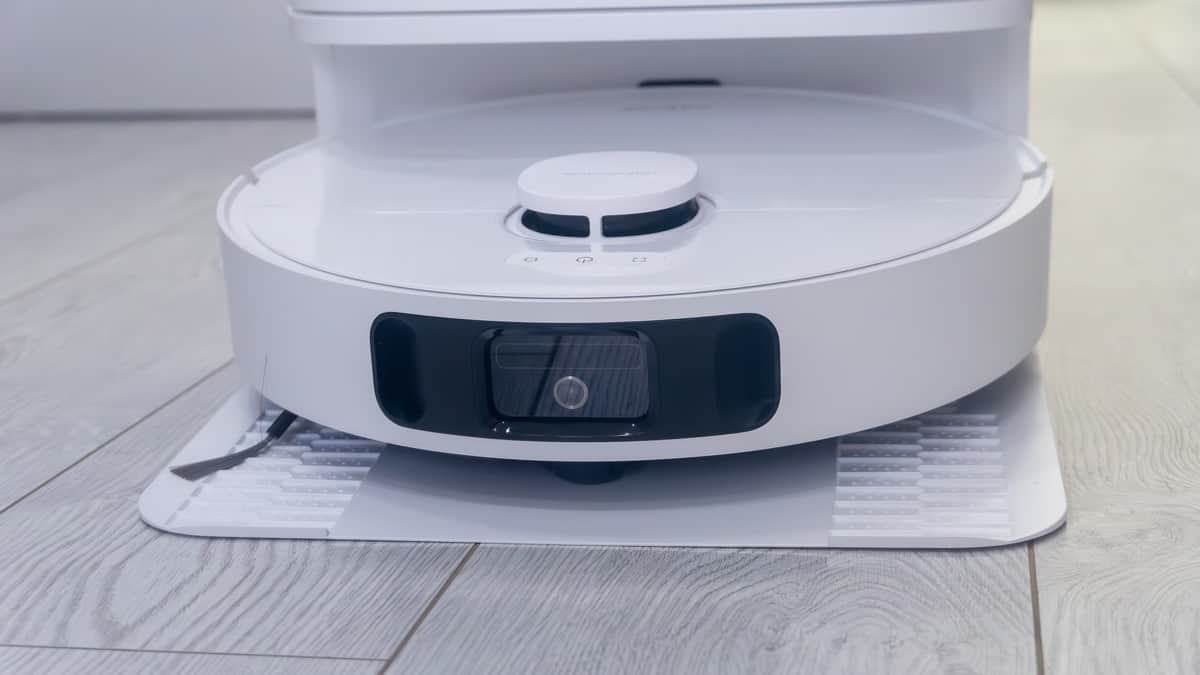
Image: Sergey Kuznetsov / for(geeks)
The Dreame D20 Ultra and Dreame L40 Ultra CE sit side-by-side in online store catalogs, almost matching each other line for line in both price and specs. After running the D20 Ultra daily in our testing apartment for six weeks and cross-referencing its performance against the L40 Ultra CE's official technical teardowns, our conclusion is surprisingly straightforward: under the hood, they are practically the same robot.
In short: both models share identical 13,000 Pa Vormax suction, dual spinning mops with edge extension, top-mounted LiDAR navigation, a 5,200 mAh battery, and an automated dock with a 3.2-liter dustbag and warm-air mop drying. The only noticeable hardware difference is the main roller brush design. As a result, your purchasing decision should come down strictly to price at checkout—there is virtually no reason to pay a premium for the badge.
Technical Specifications Breakdown
| Specification | Dreame D20 Ultra | Dreame L40 Ultra CE |
|---|---|---|
| Suction Power | Up to 13,000 Pa (Vormax) | Up to 13,000 Pa (Vormax) |
| Mopping System | DuoScrub dual rotating pads, RoboSwing | DuoScrub dual rotating pads, RoboSwing |
| Carpet Mop Lifting | Up to 10.5 mm | Up to 10.5 mm |
| Navigation | LiDAR + 3DAdapt structured light | LiDAR + 3DAdapt structured light |
| Main Roller Brush | Bristle-free solid rubber roller | TriCut roller with hair-cutting blades |
| Battery Capacity | 5,200 mAh (up to 260 minutes) | 5,200 mAh (up to 260 minutes) |
| Robot Height | 9.7 cm (with LiDAR turret) | 10.4 cm |
| Docking Station | Auto-empty 3.2L bag, 4.5L/4.0L tanks, warm-air drying | Auto-empty 3.2L bag, 4.5L/4.0L tanks, wash & dry |
| Launch Price | $520 / 49,990 ₽ | $630 / 59,990 ₽ MSRP (now heavily discounted) |
Performance data for the D20 Ultra comes directly from our hands-on benchmark suite, while the L40 Ultra CE specs are sourced from Dreame's official technical documentation and independent teardown reports. Because retail discounts fluctuate constantly, always compare current pricing on the day of purchase.
What They Share: Suction, Mopping, and Docking
Almost every component that dictates actual cleaning quality is identical between these two units. The 13,000 Pa Vormax suction motor generates plenty of static pressure, pulling embedded sand and pet hair out of low-to-medium pile carpets and deep tile grout without requiring multiple passes.
Mopping is handled by Dreame's proven DuoScrub dual rotating mop pads. Operating under constant downward spring pressure, they efficiently buff out dried coffee splatters and muddy paw prints rather than simply wiping a damp cloth over the surface. The RoboSwing algorithm swings the robot's rear end outwards when hugging perimeter walls, extending the right mop pad flush against baseboards and into tight corners.
Carpet detection is handled by bottom-mounted ultrasonic sensors. The instant the robot rolls onto a rug, it lifts both spinning mop pads 10.5 mm into the chassis while ramping the vacuum motor to maximum boost, ensuring low-pile floor coverings stay dry. Navigation relies on top-tier LDS LiDAR mapping paired with 3DAdapt structured light sensors along the front bumper to steer clear of slippers, cables, and chair legs.
The multifunction dock is also functionally identical: a 3.2-liter sealed dustbag rated for up to 100 days of dry debris, paired with a 4.5-liter clean water tank and a 4.0-liter dirty water tank. Dock height sits at approximately 59 cm. Both robots also share the same physical constraints: the ~10 cm total height cannot clear low-clearance designer furniture, and shag rugs still need no-go exclusions in the Dreamehome app since 10.5 mm of elevation won't clear deep pile fibers.
Key Differences: Roller Brushes and Pricing
The primary hardware divergence lies in the main roller brush. The D20 Ultra comes with an all-rubber, fluted roller without bristles. Because there are no tufts for hair to weave around, long human hair and pet fur naturally slide toward the removable end caps, making maintenance a quick five-second pull every two weeks.
The L40 Ultra CE, on the other hand, equips Dreame's proprietary TriCut roller brush. This module embeds tiny recessed safety blades inside the core that actively snip strands of hair as the roller rotates. Both approaches effectively solve hair tangles in multi-pet homes—it represents a different mechanical engineering philosophy rather than a meaningful difference in day-to-day cleaning cleanliness.
On the D20 Ultra, we verified active warm-air drying after every single cleaning cycle. After roughly two hours of gentle heating, the microfibers were completely dry, warm, and free of mildew odor. While the L40 Ultra CE dock also washes and dries the pads, Dreame's official collateral does not specify an exact heated airflow temperature.
Finally, price remains the main differentiator. At launch, the L40 Ultra CE was positioned about $100 higher than the D20 Ultra. Today, competitive marketplace deals frequently bring them within spitting distance of each other. With suction, mapping, battery, and tanks essentially matched, price should be your primary compass.
Which Model Should You Buy?
- Pick whichever model is cheaper on the day of purchase: You will not sacrifice suction, mopping efficiency, room mapping, or dock reliability with either choice.
- Consider the L40 Ultra CE if pricing is equal and long hair is a constant issue: The TriCut cutting roller offers a slight edge in actively severing long fibers, though the D20 Ultra's all-rubber roller is already very low-maintenance.
- Look higher up if you have high door thresholds (>20 mm): Neither unit will cross tall step-downs or high sills. If you need step-climbing capabilities, consider flagship options like Dreame's L40s Ultra or L40s Pro Ultra with their motorized EasyLeap chassis lifting, though expect to pay a substantial premium.
Dreame D20 Ultra vs. L40 Ultra CE
The Bottom Line
“Underneath the branding, the D20 Ultra and L40 Ultra CE share almost identical hardware: 13,000 Pa suction, dual spinning mops, and a self-emptying dock with warm-air drying. Buy whichever model is cheaper on the day you order.”
✓Pros
- •Identical 13,000 Pa Vormax suction and DuoScrub mopping
- •Fast, reliable LiDAR navigation with 3DAdapt obstacle avoidance
- •Capacious 3.2L self-emptying dock with automated warm-air mop drying
- •10.5 mm automatic mop elevation keeps low-pile rugs dry
- •Outstanding hair resistance across both roller brush systems
✕Cons
- •LiDAR turret limits clearance under low-profile furniture (~10 cm)
- •High-pile carpets still require app no-go zones
- •Virtually no internal hardware differences to justify price disparities
Frequently asked questions
Are the Dreame D20 Ultra and L40 Ultra CE the exact same vacuum?+
Officially they belong to different marketing lineups, but their internal specifications are virtually identical: the same 13,000 Pa suction motor, DuoScrub rotating mops, LiDAR turret with 3DAdapt, 5,200 mAh battery, and base station capacity. The primary distinction is the roller brush (solid rubber on D20 vs. TriCut hair-cutting blade on L40).
Do either of these robots feature an RGB camera for home surveillance?+
No. Both models rely on top-mounted LiDAR combined with front 3DAdapt structured light sensors for obstacle avoidance. Neither carries an active RGB camera for pet surveillance or remote video patrolling, keeping private living spaces strictly offline.
How long does the 3.2-liter dustbag actually last?+
Dreame rates the dustbag for up to 100 days of hands-off dry cleaning. In our 1.5-month hands-on test of the D20 Ultra with daily cleaning cycles and moderate hair, the bag was roughly half full, easily on pace to reach three full months.

Founder & Tech Reviewer
Technology journalist, product manager, and founder of for(geeks). Testing consumer electronics, cameras, hardware, and audio gear with hands-on scrutiny for over 15 years.